AMALFI COAST SAILING IN ITALY | 2026
Salerno - Amalfi - Procida - Ventotene - Ischia - Capri - Positano - Salerno [4-11 July 2026]
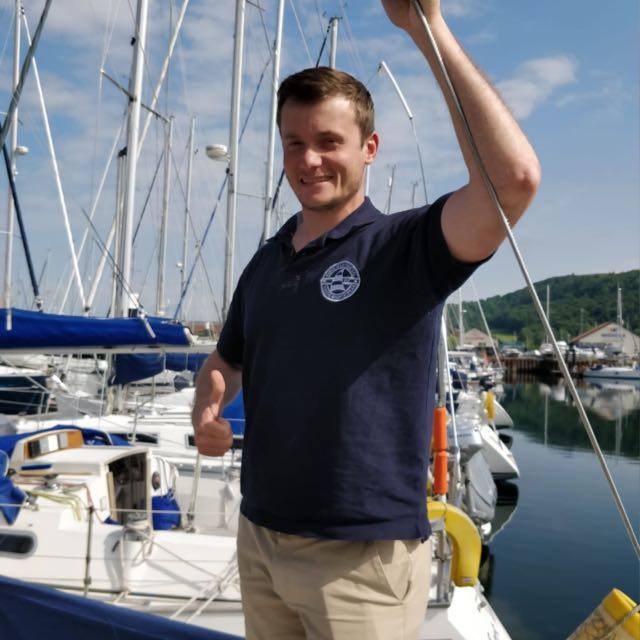
Storyteller: Ivan Brigida
The skipper and ocean lover
A detailed route within a custom layer on Google Maps
-1-
Salerno (Marina d'Arechi)
Two days before the charter, Pavel and I stopped in Rome on our way to Salerno. We caught up with friends from the publishing industry, visited a modern coworking space, and spent the evening walking along the Tiber River. As soon as the heat subsides, Rome comes alive—the streets stay packed with people enjoying the warm summer evenings until late at night.
The next morning brought an unpleasant surprise: we realized that marina berths along the Amalfi Coast should have been booked weeks, or even months, in advance. We spent Friday morning calling marinas, trying to secure spots for our route. Capri, Ischia, and Sorrento were already fully booked, but we managed to arrange berths for the rest of the itinerary.
After a comfortable two-hour ride on the high-speed train, we arrived in Salerno. It was hot, but the charter check-in at Marina d'Arechi was quick and straightforward. The staff were friendly, and the entire process was based on a high level of trust.
We also met a crew that had returned the previous week. They had encountered a severe thunderstorm with strong squalls and were forced to end their trip a day early. They confirmed what we had already discovered ourselves: in July, booking marinas is one of the biggest challenges when sailing the Amalfi Coast.
Salerno (Marina d'Arechi)
Two days before the charter, Pavel and I stopped in Rome on our way to Salerno. We caught up with friends from the publishing industry, visited a modern coworking space, and spent the evening walking along the Tiber River. As soon as the heat subsides, Rome comes alive—the streets stay packed with people enjoying the warm summer evenings until late at night.
The next morning brought an unpleasant surprise: we realized that marina berths along the Amalfi Coast should have been booked weeks, or even months, in advance. We spent Friday morning calling marinas, trying to secure spots for our route. Capri, Ischia, and Sorrento were already fully booked, but we managed to arrange berths for the rest of the itinerary.
After a comfortable two-hour ride on the high-speed train, we arrived in Salerno. It was hot, but the charter check-in at Marina d'Arechi was quick and straightforward. The staff were friendly, and the entire process was based on a high level of trust.
We also met a crew that had returned the previous week. They had encountered a severe thunderstorm with strong squalls and were forced to end their trip a day early. They confirmed what we had already discovered ourselves: in July, booking marinas is one of the biggest challenges when sailing the Amalfi Coast.
- Marina d'Arechi
- Prosecco on board
- Boat Aletheia (Oceanis 46.1)
-2 -
Amalfi
We left Marina d'Arechi early, around 8 a.m., hoping to cover as many miles as possible before the midday heat. Thirty minutes later, just after hoisting the sails, our plans changed abruptly—the sprayhood broke. We had no choice but to turn back to the marina, where the staff quickly repaired it along with a loose lifeline fitting. Fortunately, it was the only real equipment failure of the week (apart from tightening the swim ladder bolts every day).
With the repairs behind us, we headed west again. There wasn't enough wind for sailing, so we cruised under engine, enjoying our first day on the water. The Amalfi Coast is steep and deep, with very few places suitable for anchoring. Many of the sheltered bays are occupied by mooring buoys belonging to waterfront restaurants.
After a few phone calls, we managed to reserve one of those buoys for lunch at Borgo Santandrea. A tender picked us up from the yacht and brought us ashore, where we enjoyed excellent service, refreshing local white wine, and one of the best pizzas of the trip—a zucchini pizza that was surprisingly simple yet unforgettable.
In the afternoon we found a quiet anchorage behind a nearby headland for our first swim. Crystal-clear water, rocky seabed, masks and fins, and a couple of relaxing hours in the sea—it was exactly how we had imagined the start of the cruise.
Amalfi
We left Marina d'Arechi early, around 8 a.m., hoping to cover as many miles as possible before the midday heat. Thirty minutes later, just after hoisting the sails, our plans changed abruptly—the sprayhood broke. We had no choice but to turn back to the marina, where the staff quickly repaired it along with a loose lifeline fitting. Fortunately, it was the only real equipment failure of the week (apart from tightening the swim ladder bolts every day).
With the repairs behind us, we headed west again. There wasn't enough wind for sailing, so we cruised under engine, enjoying our first day on the water. The Amalfi Coast is steep and deep, with very few places suitable for anchoring. Many of the sheltered bays are occupied by mooring buoys belonging to waterfront restaurants.
After a few phone calls, we managed to reserve one of those buoys for lunch at Borgo Santandrea. A tender picked us up from the yacht and brought us ashore, where we enjoyed excellent service, refreshing local white wine, and one of the best pizzas of the trip—a zucchini pizza that was surprisingly simple yet unforgettable.
In the afternoon we found a quiet anchorage behind a nearby headland for our first swim. Crystal-clear water, rocky seabed, masks and fins, and a couple of relaxing hours in the sea—it was exactly how we had imagined the start of the cruise.
- Our First Lunch Stop
- A Seaside Restaurant Worth Visiting
- The Zucchini Pizza We Still Talk About
-2 -
Amalfi (con-d)
In the afternoon we found a quiet anchorage behind a nearby headland for our first swim. Crystal-clear water, rocky seabed, masks and fins, and a couple of relaxing hours in the sea—it was exactly how we had imagined the start of the cruise.
By evening we reached Amalfi, where we moored at a small private pontoon. The pontoon was run by Giulio, a true master of boat handling, who somehow managed to fit yachts into impossibly tight spaces with calm precision. Watching him direct and park boats in the crowded harbor was a show in itself.
The town was even more charming after sunset, with its narrow streets, lively squares, and the beautifully illuminated Cathedral of St. Andrew. We couldn't leave without trying Amalfi's famous lemon sorbet served inside a giant lemon. At €15, it was the most expensive ice cream I've ever bought—but also one of the most memorable.
Amalfi is also a magnet for superyachts. Several were anchored just outside the harbor, including Michael Jordan's 74-meter yacht, M'Brace. We were lucky enough to spot both the yacht and Michael Jordan himself later that evening as he and his guests headed into town.
From that moment on, identifying superyachts became one of our favorite games. Using MarineTraffic and AI image recognition, we could often identify a yacht from its silhouette alone, learn who owned it, when it was built, and even whether it was available for charter. Many carried an impressive collection of water toys—jet skis, inflatable slides, huge tenders, and every gadget imaginable—turning them into floating luxury resorts.
Amalfi (con-d)
In the afternoon we found a quiet anchorage behind a nearby headland for our first swim. Crystal-clear water, rocky seabed, masks and fins, and a couple of relaxing hours in the sea—it was exactly how we had imagined the start of the cruise.
By evening we reached Amalfi, where we moored at a small private pontoon. The pontoon was run by Giulio, a true master of boat handling, who somehow managed to fit yachts into impossibly tight spaces with calm precision. Watching him direct and park boats in the crowded harbor was a show in itself.
The town was even more charming after sunset, with its narrow streets, lively squares, and the beautifully illuminated Cathedral of St. Andrew. We couldn't leave without trying Amalfi's famous lemon sorbet served inside a giant lemon. At €15, it was the most expensive ice cream I've ever bought—but also one of the most memorable.
Amalfi is also a magnet for superyachts. Several were anchored just outside the harbor, including Michael Jordan's 74-meter yacht, M'Brace. We were lucky enough to spot both the yacht and Michael Jordan himself later that evening as he and his guests headed into town.
From that moment on, identifying superyachts became one of our favorite games. Using MarineTraffic and AI image recognition, we could often identify a yacht from its silhouette alone, learn who owned it, when it was built, and even whether it was available for charter. Many carried an impressive collection of water toys—jet skis, inflatable slides, huge tenders, and every gadget imaginable—turning them into floating luxury resorts.
- Exploring Amalfi Cathedral
- The Lemon Sorbet We Couldn't Resist
- Our Evening View from the Marina
- 3-
Procida
We left Amalfi and headed west toward the Bay of Naples. The weather was perfect: almost no wind, no waves, and clear skies. After a relaxed breakfast, we were ready to leave—but we thought we might be trapped in the pontoon because of the tight arrangement of boats. Giulio, however, once again showed his professionalism: even in the smallest spaces, he calmly moved boats around and found a way out. No problem at all.
Before crossing the Bay of Naples, we stopped at another anchorage for a swim. There were already a few boats there, but the water was still crystal clear and inviting.
After the morning swim, we started the three-hour passage across the bay. The visibility was excellent: on one side we had views of Mount Vesuvius, and on the other side the dramatic rocky coastline of Capri.
We arrived at Procida without any issues and immediately dropped anchor on the eastern side of the island for another swim. It was a beautiful, spacious anchorage with plenty of room, but our marina reservation was just around the next headland, so we continued there for the night.
In the evening, we bought a bottle of Prosecco and some peaches and went exploring the island. Procida turned out to be a charming place with narrow streets, colorful houses, and steep lanes climbing through the hills. One interesting change we noticed: while scooters used to dominate Italian islands, many locals now use electric bicycles with wide tires—perfect for the hilly terrain.
At sunset, we climbed up to a viewpoint and looked back at the anchorage where we had been swimming earlier that day. Later, while wandering through small streets and hidden corners, we got a little lost and ended up walking for about 40 minutes to find our way back to the marina.
A perfect first evening on Procida.
Early wake-up tomorrow—departure at 5 a.m. for Ventotene, the most remote point of our route.
Procida
We left Amalfi and headed west toward the Bay of Naples. The weather was perfect: almost no wind, no waves, and clear skies. After a relaxed breakfast, we were ready to leave—but we thought we might be trapped in the pontoon because of the tight arrangement of boats. Giulio, however, once again showed his professionalism: even in the smallest spaces, he calmly moved boats around and found a way out. No problem at all.
Before crossing the Bay of Naples, we stopped at another anchorage for a swim. There were already a few boats there, but the water was still crystal clear and inviting.
After the morning swim, we started the three-hour passage across the bay. The visibility was excellent: on one side we had views of Mount Vesuvius, and on the other side the dramatic rocky coastline of Capri.
We arrived at Procida without any issues and immediately dropped anchor on the eastern side of the island for another swim. It was a beautiful, spacious anchorage with plenty of room, but our marina reservation was just around the next headland, so we continued there for the night.
In the evening, we bought a bottle of Prosecco and some peaches and went exploring the island. Procida turned out to be a charming place with narrow streets, colorful houses, and steep lanes climbing through the hills. One interesting change we noticed: while scooters used to dominate Italian islands, many locals now use electric bicycles with wide tires—perfect for the hilly terrain.
At sunset, we climbed up to a viewpoint and looked back at the anchorage where we had been swimming earlier that day. Later, while wandering through small streets and hidden corners, we got a little lost and ended up walking for about 40 minutes to find our way back to the marina.
A perfect first evening on Procida.
Early wake-up tomorrow—departure at 5 a.m. for Ventotene, the most remote point of our route.
- Live Streaming on TikTok
- Evening at Anchor off Procida
- Sunrise Departure
-4- [May 13]
Ventotene
We left the marina early in the morning and, as usual, decided to try our luck trolling for fish. Just like on previous days, the fish weren't particularly interested in our lures. Fortunately, the weather more than made up for it—there was almost no wind, no swell, and the sea was perfectly calm.
Without any real adventures along the way, we reached the westernmost point of our route: Ventotene. This small island is far less visited by superyachts than Capri or Ischia. The reason is simple—its marinas aren't designed for very large vessels, the island itself has only about 3,000 residents, and there are just a handful of good restaurants.
Ventotene
We left the marina early in the morning and, as usual, decided to try our luck trolling for fish. Just like on previous days, the fish weren't particularly interested in our lures. Fortunately, the weather more than made up for it—there was almost no wind, no swell, and the sea was perfectly calm.
Without any real adventures along the way, we reached the westernmost point of our route: Ventotene. This small island is far less visited by superyachts than Capri or Ischia. The reason is simple—its marinas aren't designed for very large vessels, the island itself has only about 3,000 residents, and there are just a handful of good restaurants.
- Ventotene - lunch in the marina at the natural grotto
- Another morning beauty from the boat
- Pizza on the go, fresh from a boat's oven
That evening we ended up in one of them, located right in the middle of Ventotene's remarkable historic harbor—an ancient Roman port carved directly into the volcanic rock nearly 2,000 years ago. I had hoped we could spend the night inside the old harbor, but it quickly became obvious that we'd be packed in like sardines. Instead, we found a free private berth just around the corner, which turned out to be a much more comfortable option.
Dinner was excellent—if you ignore the occasional tiny pebble falling from the cliff above onto our table.
Even before entering the harbor, we noticed the imposing fortress on the neighboring island of Santo Stefano. Its history is far darker than its beautiful surroundings suggest.
For centuries, Ventotene and Santo Stefano served as places of exile and imprisonment. Roman emperors sent unwanted members of their own families here, while the Bourbon Kingdom later built a striking panopticon prison on Santo Stefano. During the Fascist era, political prisoners were confined on the island. Ironically, many of them used their imprisonment to discuss the future of Europe, and it was here that the famous Ventotene Manifesto was written—one of the founding documents that inspired the idea of a united Europe.
The following morning we set off early once again, this time heading back east. Our next destination was the much more famous island of Ischia.
Dinner was excellent—if you ignore the occasional tiny pebble falling from the cliff above onto our table.
Even before entering the harbor, we noticed the imposing fortress on the neighboring island of Santo Stefano. Its history is far darker than its beautiful surroundings suggest.
For centuries, Ventotene and Santo Stefano served as places of exile and imprisonment. Roman emperors sent unwanted members of their own families here, while the Bourbon Kingdom later built a striking panopticon prison on Santo Stefano. During the Fascist era, political prisoners were confined on the island. Ironically, many of them used their imprisonment to discuss the future of Europe, and it was here that the famous Ventotene Manifesto was written—one of the founding documents that inspired the idea of a united Europe.
The following morning we set off early once again, this time heading back east. Our next destination was the much more famous island of Ischia.
-5-
Ischia - Aragonese Castle
Having reached the furthest point of our trip, we started making our way back, closer to the more popular Amalfi route.
Once again, we set off early in the morning, hoping to catch some fish. The sea was calm and almost completely windless, and a few hours passed almost unnoticed. We were treated to a beautiful sunrise — its colours were strikingly different from all the sunsets we had seen before.
As we approached the island of Ischia, we decided to stop for a swim right in the open sea. It was an unforgettable experience: the boat was drifting in the middle of the sea, with several hundred metres of water beneath us and nothing but the endless blue horizon all around.
We enjoyed it so much that we decided not to rush back to civilisation. Instead, we found a beautiful bay, Lido di San Montano, on the western side of Ischia, and decided to spend some more time enjoying its untouched beauty.
It turned out to be one of the few relatively wild bays in the area, so before long, more boats and catamarans started arriving. We still managed to spend several hours swimming and snorkelling, and even spotted some marine life around the rocks.
We then continued along the island, looking for somewhere to spend the night. Vera was with us, and she quickly transformed into a local, approaching the private piers and asking the locals in Italian if they had a space for us.
And luck was on our side!
We managed to moor right beneath the walls of the Aragonese Castle, on buoys among the small local boats. Both marinas on the island were full, so we were absolutely delighted to spend the evening in such a spectacular place.
Our first stop was, of course, the castle itself, where we spent a couple of hours wandering around. One of the most surprising things we learned was that it had been bought by a single lawyer only about 30 years ago, for what was apparently not a particularly large sum.
Today, it is a privately owned castle, beautifully maintained and even home to a small shop selling local jewellery.
Standing there, we couldn't help imagining how much history had unfolded within those walls — and how lucky we were to have the chance to experience this place ourselves.
Ischia - Aragonese Castle
Having reached the furthest point of our trip, we started making our way back, closer to the more popular Amalfi route.
Once again, we set off early in the morning, hoping to catch some fish. The sea was calm and almost completely windless, and a few hours passed almost unnoticed. We were treated to a beautiful sunrise — its colours were strikingly different from all the sunsets we had seen before.
As we approached the island of Ischia, we decided to stop for a swim right in the open sea. It was an unforgettable experience: the boat was drifting in the middle of the sea, with several hundred metres of water beneath us and nothing but the endless blue horizon all around.
We enjoyed it so much that we decided not to rush back to civilisation. Instead, we found a beautiful bay, Lido di San Montano, on the western side of Ischia, and decided to spend some more time enjoying its untouched beauty.
It turned out to be one of the few relatively wild bays in the area, so before long, more boats and catamarans started arriving. We still managed to spend several hours swimming and snorkelling, and even spotted some marine life around the rocks.
We then continued along the island, looking for somewhere to spend the night. Vera was with us, and she quickly transformed into a local, approaching the private piers and asking the locals in Italian if they had a space for us.
And luck was on our side!
We managed to moor right beneath the walls of the Aragonese Castle, on buoys among the small local boats. Both marinas on the island were full, so we were absolutely delighted to spend the evening in such a spectacular place.
Our first stop was, of course, the castle itself, where we spent a couple of hours wandering around. One of the most surprising things we learned was that it had been bought by a single lawyer only about 30 years ago, for what was apparently not a particularly large sum.
Today, it is a privately owned castle, beautifully maintained and even home to a small shop selling local jewellery.
Standing there, we couldn't help imagining how much history had unfolded within those walls — and how lucky we were to have the chance to experience this place ourselves.
- Excited to explore the castle
- View from the top of the castle
- Untouched beauty - carefully preserved in the castle
-6-
Capri
The next morning started with another early wake-up, but this time we had some delicious pastries and a rum baba to go with our morning coffee!
Around Ischia, we also came across fishing pots — apparently, they are reserved for local fishermen, unless you are willing to pay quite a lot for a fishing permit. We clearly didn’t look enough like a local fishing boat, so we barely caught anything.
But then, just as we were finishing our coffee and pastries, we spotted dolphins! It was the only time we saw them during the entire week. Beautiful creatures — they played and jumped around the boat, accompanying us for several minutes.
We continued towards Capri, one of the most iconic places on the route, with its dramatic mountains and just one marina, where a berth supposedly needs to be booked months in advance.
On the other side of the island are the famous Faraglioni rocks, with a narrow passage right between them. I immediately remembered a music video by the Italian group Il Volo — I had seen these rocks and a boat in the video years ago, and the whole setting really stayed with me (Il Volo – A chi mi dice)
Some of us, however, had another reason to visit the island. A few had been there many years ago and wanted to return, while others were fascinated by its history — including the fact that Capri was once home to Maxim Gorky and Vladimir Lenin and became an important gathering place for Russian political exiles and revolutionaries in the early 20th century.
We proudly sailed around the rocks and then tried to stop at a restaurant buoy for lunch and a walk ashore. Unfortunately, all the buoys were already taken, and we were offered a place to anchor instead.
We didn't really want to leave one of us behind to guard the boat, so we decided to keep sailing.
Capri
The next morning started with another early wake-up, but this time we had some delicious pastries and a rum baba to go with our morning coffee!
Around Ischia, we also came across fishing pots — apparently, they are reserved for local fishermen, unless you are willing to pay quite a lot for a fishing permit. We clearly didn’t look enough like a local fishing boat, so we barely caught anything.
But then, just as we were finishing our coffee and pastries, we spotted dolphins! It was the only time we saw them during the entire week. Beautiful creatures — they played and jumped around the boat, accompanying us for several minutes.
We continued towards Capri, one of the most iconic places on the route, with its dramatic mountains and just one marina, where a berth supposedly needs to be booked months in advance.
On the other side of the island are the famous Faraglioni rocks, with a narrow passage right between them. I immediately remembered a music video by the Italian group Il Volo — I had seen these rocks and a boat in the video years ago, and the whole setting really stayed with me (Il Volo – A chi mi dice)
Some of us, however, had another reason to visit the island. A few had been there many years ago and wanted to return, while others were fascinated by its history — including the fact that Capri was once home to Maxim Gorky and Vladimir Lenin and became an important gathering place for Russian political exiles and revolutionaries in the early 20th century.
We proudly sailed around the rocks and then tried to stop at a restaurant buoy for lunch and a walk ashore. Unfortunately, all the buoys were already taken, and we were offered a place to anchor instead.
We didn't really want to leave one of us behind to guard the boat, so we decided to keep sailing.
- Irresistible Rum Baba and Croissants
- They Found Us Before the Coffee Did
- Iconic Rocks - Faraglioni of Capri
-7-
Positano
We had saved one of the best for last — Positano, an incredibly beautiful town built into the cliffs.
It reminded us a lot of our first stop, Amalfi, but somehow had a completely different vibe. Superyachts were already lining up on the approach, but the town itself felt a little less touristy. The same narrow streets, little shops and restaurants that are impossible to get into without a reservation.
By the time we had given up on finding somewhere to eat, we were ready to head back to the boat and cook dinner ourselves. There was just one problem — we needed to buy some Prosecco for dinner.
So we popped into a shop… and discovered that it had a huge terrace where you could actually sit down and have dinner.
That was the moment we realised that we simply hadn't figured out how Positano works. You really need to plan ahead here — and know the right places.
In the end, as usual, everything worked out perfectly.
After dinner, we headed down to the beach to catch a water taxi back to our boat, which was anchored on the moorings marked “Lucibello” in the pilot book.
We had expected to find some small fishing pier or a simple landing spot. Instead, the whole area was fenced off as Lucibello.
And that's when we discovered the story behind the name.
The Lucibello business was started back in 1940 by a local fisherman, Salvatore Lucibello, who bought just two small rowing boats. Over the decades, what began as a tiny fishing operation grew into one of the oldest maritime businesses on the Amalfi Coast.
His children and grandchildren continued the family business, expanding from fishing and traditional boats into water taxis, fast ferries and, eventually, private yacht charters.
And more than 80 years later, the Lucibello family is still running the business.
From two little fishing boats in 1940 to water taxis and luxury yachts today.
That's Positano: a place where even the modern tourist business still has deep roots in the sea — and where traditions are very much alive.
Positano
We had saved one of the best for last — Positano, an incredibly beautiful town built into the cliffs.
It reminded us a lot of our first stop, Amalfi, but somehow had a completely different vibe. Superyachts were already lining up on the approach, but the town itself felt a little less touristy. The same narrow streets, little shops and restaurants that are impossible to get into without a reservation.
By the time we had given up on finding somewhere to eat, we were ready to head back to the boat and cook dinner ourselves. There was just one problem — we needed to buy some Prosecco for dinner.
So we popped into a shop… and discovered that it had a huge terrace where you could actually sit down and have dinner.
That was the moment we realised that we simply hadn't figured out how Positano works. You really need to plan ahead here — and know the right places.
In the end, as usual, everything worked out perfectly.
After dinner, we headed down to the beach to catch a water taxi back to our boat, which was anchored on the moorings marked “Lucibello” in the pilot book.
We had expected to find some small fishing pier or a simple landing spot. Instead, the whole area was fenced off as Lucibello.
And that's when we discovered the story behind the name.
The Lucibello business was started back in 1940 by a local fisherman, Salvatore Lucibello, who bought just two small rowing boats. Over the decades, what began as a tiny fishing operation grew into one of the oldest maritime businesses on the Amalfi Coast.
His children and grandchildren continued the family business, expanding from fishing and traditional boats into water taxis, fast ferries and, eventually, private yacht charters.
And more than 80 years later, the Lucibello family is still running the business.
From two little fishing boats in 1940 to water taxis and luxury yachts today.
That's Positano: a place where even the modern tourist business still has deep roots in the sea — and where traditions are very much alive.
- Positano from the sea
- Another Glorious View of Positano
- One of many superyachts 100m+ we've seen
-8-
On our way back to Salerno
Nothing particularly spectacular happened during the final leg, so I’ll leave you with a few more photos from Capri and our stops along the way.
On our way back to Salerno
Nothing particularly spectacular happened during the final leg, so I’ll leave you with a few more photos from Capri and our stops along the way.
- Approaching the Faraglioni
- Superyachts: Money on the Water
- Peach Wine
FOLLOW US ON SOCIAL MEDIA to be up to date about upcoming trips
Do you want come sailing
with us
some day?
with us
some day?
If you have any questions or you would like to try sailing, please, contact us by using this form or directly on WhatsApp/Facebook.
Also if you have any comments or suggestions about our sailing blog you are very welcome to share it with us!
Also if you have any comments or suggestions about our sailing blog you are very welcome to share it with us!
